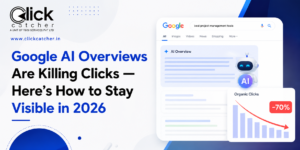
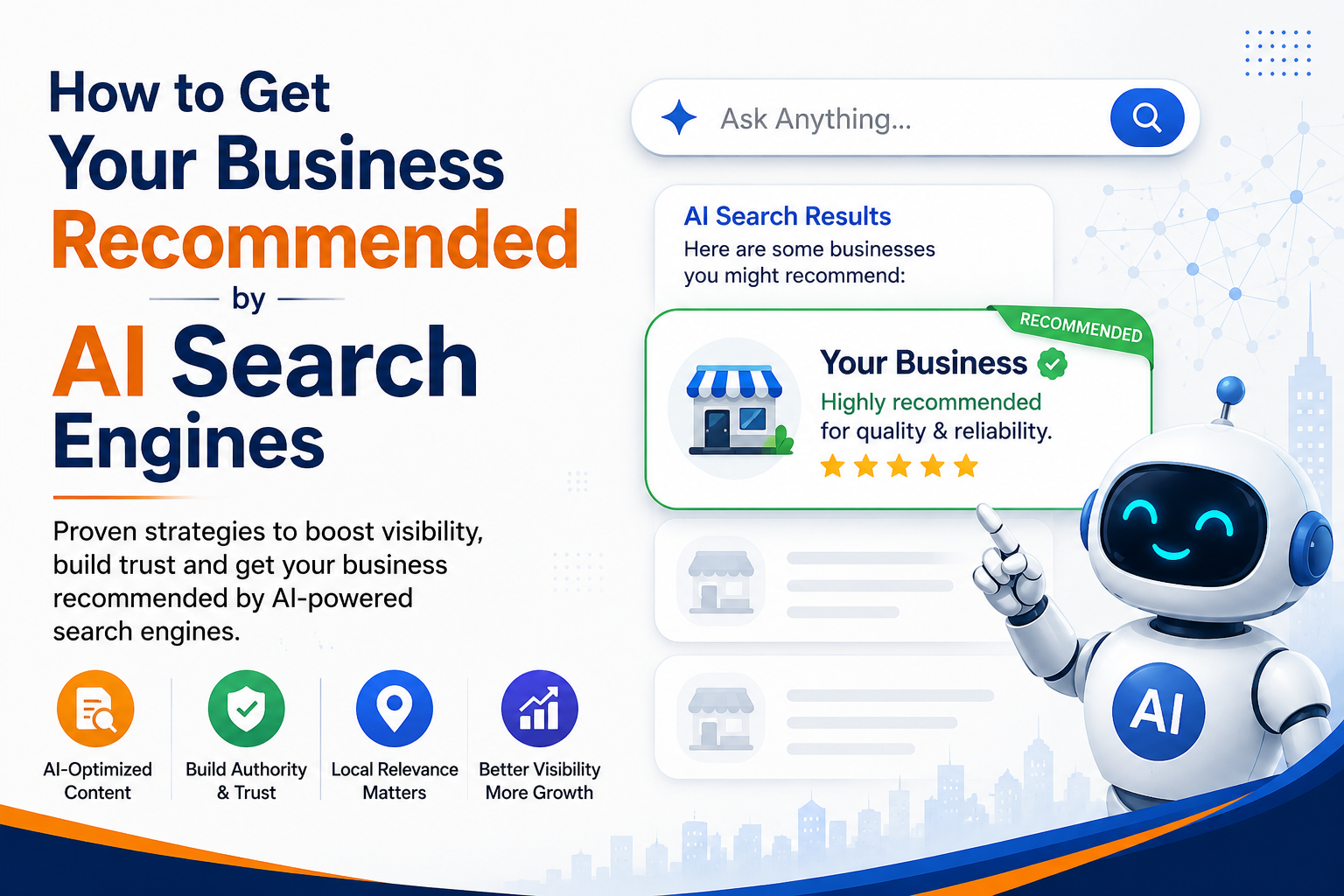
When someone asks ChatGPT, Perplexity, or Google’s AI Overviews “what’s the best digital marketing agency in Noida” or “which CRM should I use for a small team,” they don’t get ten blue links to sift through. They get a direct answer — often naming two or three brands by name. If your business isn’t one of them, you don’t just lose a click. You lose the customer entirely, because most people never scroll past the AI’s answer.
This is the new battleground for visibility, and it runs on different rules than traditional SEO. Here’s what it actually takes to get recommended.
What Does It Mean to Be “Recommended” by an AI Search Engine?
AI search engines like ChatGPT, Perplexity, Google AI Overviews, and Gemini don’t crawl the web the way Google’s classic algorithm does. Instead, they synthesize an answer by pulling information from multiple sources, cross-checking facts, and citing (or naming) the sources they trust most. Being “recommended” means your brand, product, or service gets mentioned by name in that synthesized answer — as a suggestion, a citation, or part of a comparison.
This practice now has its own name: Generative Engine Optimization (GEO), sometimes also called Answer Engine Optimization (AEO). Both describe the same shift — optimizing content so AI models understand it, trust it, and choose to reference it.
Why this matters right now: Search behavior is moving fast toward zero-click, AI-mediated answers. If your content strategy is still built purely for the classic “10 blue links” model, you’re optimizing for a search experience that’s already shrinking.
Why AI Search Recommendations Matter for Your Business
- Higher purchase intent: Someone asking an AI assistant a direct question (“best accounting software for freelancers”) is often closer to a buying decision than someone browsing a search results page.
- Built-in trust transfer: When ChatGPT or Perplexity names your brand, users treat it as a vetted recommendation, not an ad — that trust carries over to you.
- Reduced competition, for now: Very few businesses have adapted their content specifically for AI retrieval, so early movers have an outsized advantage.
- Multi-platform reach: A single well-structured, authoritative piece of content can get pulled into Google AI Overviews, ChatGPT answers, and Perplexity citations simultaneously.
- Longer content lifespan: AI models tend to favor well-established, frequently-cited, fact-dense pages over freshly published thin content — so quality content compounds in value.
How AI Search Engines Decide What to Recommend
AI models don’t have opinions of their own — they base recommendations on patterns found across the web. Research from Semrush’s GEO study and similar industry analyses point to a consistent set of signals models rely on:
| Signal | Why It Matters |
|---|---|
| Clear, structured content | Headings, lists, and Q&A formatting are easier for models to parse and extract |
| Third-party mentions & citations | Being referenced on other authoritative sites signals real-world trust |
| Consistent brand information (NAP) | Name, address, phone, and service details must match across your site, Google Business Profile, and directories |
| Original data & expertise (E-E-A-T) | First-hand experience, credentials, and unique insight outrank generic rewrites |
| Reviews and reputation signals | Google Business Profile, Trustpilot, and industry review sites feed directly into recommendation confidence |
| Recency and maintenance | Updated content is trusted more than stale, outdated pages |
Steps to Get Your Business Recommended by AI Search Engines
1. Build Content Around Real Questions, Not Just Keywords
AI models are trained to answer questions conversationally. Structure your content as direct answers to the exact questions your customers ask — “how much does X cost,” “is X better than Y,” “what’s the best X for small businesses.” Lead with the answer in the first two sentences, then expand with supporting detail.
2. Strengthen Your E-E-A-T Signals
Google’s own Helpful Content documentation emphasizes experience, expertise, authoritativeness, and trust as core ranking and retrieval factors. Show author credentials, cite original data, and demonstrate first-hand experience rather than publishing generic, AI-rewritten filler.
3. Get Mentioned on Other Authoritative Sites
AI models weigh third-party validation heavily. Pursue digital PR, guest contributions, industry roundups, and directory listings (Clutch, G2, GoodFirms) so your brand shows up in the same conversations your prospects are having elsewhere.
4. Keep Your Business Information Consistent Everywhere
Inconsistent business names, addresses, or service descriptions across your website, Google Business Profile, and directories confuse retrieval models. Audit and standardize this information across every platform you appear on.
5. Use Structured Data Markup
Schema markup (Organization, Product, FAQPage, Review) gives AI crawlers machine-readable context about who you are and what you offer. Schema.org remains the standard vocabulary most AI and search systems reference when parsing structured data.
6. Publish Comparison and “Best For” Content
A large share of AI search queries are comparative (“X vs Y,” “best X for Z use case”). Publishing honest, well-researched comparison content — including where competitors genuinely do better — builds the kind of balanced authority AI models tend to trust and cite.
7. Monitor What AI Engines Are Already Saying About You
Run regular checks by asking ChatGPT, Perplexity, and Gemini directly about your industry and niche. This shows you exactly where you stand and which competitors are currently winning the recommendation.
Quick win: Turn your most-visited service pages into a clear Q&A format with a concise 40–60 word direct answer at the top of each section. This single change dramatically improves how easily AI models can lift and cite your content.
Common Mistakes That Keep Businesses Out of AI Recommendations
- Writing vague, marketing-heavy copy instead of direct, factual answers
- Ignoring Google Business Profile optimization and reviews
- Publishing content with no author attribution or credentials
- Inconsistent NAP (name, address, phone) data across the web
- No structured data or schema markup on key pages
- Treating GEO as a one-time project instead of an ongoing process
Want Your Business Showing Up in AI Search Results?
Click Catcher helps businesses build AEO/GEO-ready content, structured data, and authority signals that get picked up by ChatGPT, Perplexity, and Google AI Overviews.
Frequently Asked Questions
1. What is the difference between SEO and GEO?
Traditional SEO focuses on ranking a webpage in search results. GEO (Generative Engine Optimization) focuses on getting your content referenced or recommended inside AI-generated answers, which follow different retrieval and trust signals than classic ranking algorithms.
2. How long does it take to get recommended by AI search engines?
There’s no fixed timeline, but most businesses start seeing early mentions within 2–4 months of consistent GEO-focused content and authority-building work, with stronger results compounding over 6–12 months.
3. Do I need to change my entire website for AI search optimization?
No. Most businesses start by restructuring their highest-value pages into clear Q&A formats, adding schema markup, and strengthening off-site mentions — a full site rebuild isn’t necessary.
4. Can small or local businesses get recommended by AI search engines?
Yes. Local businesses often benefit even faster because AI models rely heavily on Google Business Profile data, reviews, and local citations, which are typically less competitive to optimize than broad national keywords.
5. How can I check if AI engines are already mentioning my business?
Ask ChatGPT, Perplexity, and Gemini industry-relevant questions directly (e.g., “best [service] in [city]”) and note whether your brand appears. Several emerging tools also track AI citation visibility automatically.