In today’s fiercely competitive digital landscape, showing up on the first page of Google is no longer optional — it’s essential. Whether you run a local bakery or a global SaaS platform, Search Engine Optimization (SEO) is the single most cost-effective strategy to drive qualified traffic, build brand authority, and outpace competitors.
At Click Catcher, we help businesses navigate the complex world of SEO with data-backed strategies and transparent reporting. This comprehensive guide walks you through the best SEO services available today, how they work, and how to choose the right mix for your goals.
“93% of all online experiences begin with a search engine. If you’re not on page one, you’re invisible.” — Search Engine Journal
📋 Table of Contents
- 1. What Are SEO Services?
- 2. On-Page SEO
- 3. Off-Page SEO & Link Building
- 4. Technical SEO
- 5. Local SEO
- 6. Content Marketing & SEO
- 7. E-Commerce SEO
- 8. SEO Audits & Analytics
- 9. How to Choose the Right SEO Partner
- 10. Click Catcher’s SEO Approach
- 11. Frequently Asked Questions
1. What Are SEO Services?
SEO services are professional strategies and tactics designed to improve a website’s visibility in organic (non-paid) search engine results. They encompass everything from keyword research and content creation to technical audits and link acquisition.
According to BrightEdge Research, organic search drives 53% of all website traffic — more than any other channel, including paid ads and social media.
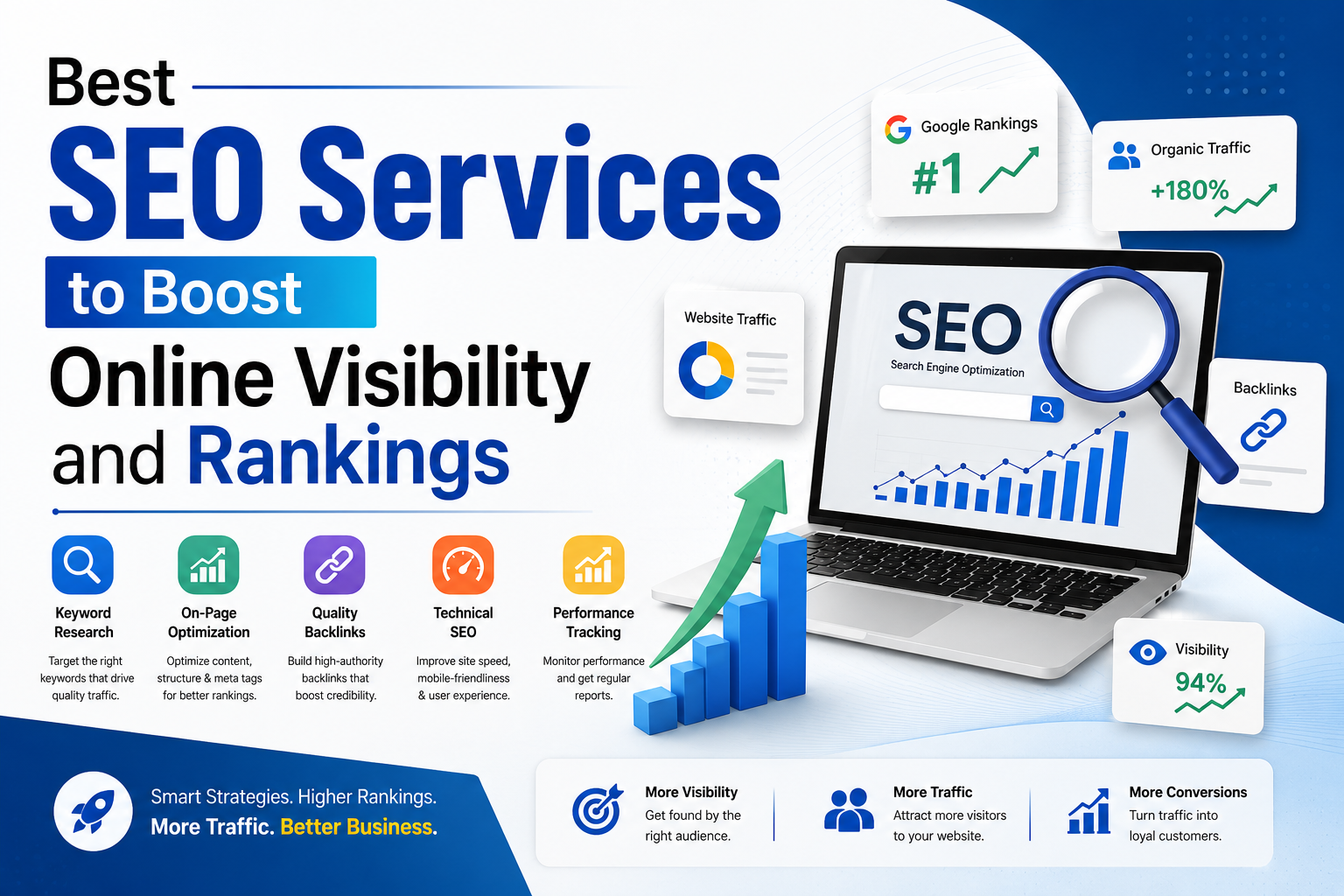
A full-service SEO strategy typically includes:
- Keyword research and competitive analysis
- On-page content optimization
- Technical site improvements
- Link building and authority development
- Local and international targeting
- Performance tracking and reporting
2. On-Page SEO
On-page SEO refers to all optimizations made directly on your website to make pages more relevant and crawlable. It is the foundation every other SEO effort is built upon.
Key On-Page Elements
- Title Tags & Meta Descriptions: Craft compelling, keyword-rich titles under 60 characters and meta descriptions under 160 characters.
- Header Tags (H1–H6): Structure your content with clear hierarchies that guide readers and search bots alike.
- Keyword Placement: Naturally integrate primary and LSI (Latent Semantic Indexing) keywords throughout your content.
- Image Alt Text: Describe every image accurately for both accessibility and image-search visibility.
- Internal Linking: Connect related pages to distribute link equity and reduce bounce rate.
- URL Structure: Keep URLs short, descriptive, and keyword-relevant (e.g., /seo-services-india).
Learn more about on-page best practices from Google’s own SEO Starter Guide.
3. Off-Page SEO & Link Building
Off-page SEO builds your site’s authority in the eyes of search engines by earning signals from other websites. The most powerful off-page signal is backlinks — links pointing from authoritative, relevant sites to yours.
Proven Link-Building Strategies
- Guest Blogging: Publish expert articles on reputable publications in your niche.
- Digital PR: Earn editorial mentions in news outlets and industry media.
- Broken Link Building: Find broken links on relevant sites and suggest your content as a replacement.
- Resource Page Outreach: Get listed on curated industry resource pages.
- HARO (Help A Reporter Out): Provide expert quotes to journalists for high-authority backlinks.
- Skyscraper Technique: Create content significantly better than top-ranking pages and promote it.
For a deep dive into link-building tactics, visit Ahrefs’ Link Building Guide, one of the most comprehensive free resources available.
Quality over quantity: A single link from Forbes.com is worth more than 100 links from low-authority blogs. Focus on relevance and domain authority.
4. Technical SEO
Technical SEO ensures that search engine crawlers can efficiently find, crawl, index, and render your website. Even the best content won’t rank if technical issues prevent Google from properly reading your pages.
Critical Technical SEO Factors
- Site Speed: Google’s Core Web Vitals make page speed a direct ranking factor. Use tools like Google PageSpeed Insights to benchmark your scores.
- Mobile-First Indexing: Google predominantly uses the mobile version of your site for indexing.
- HTTPS & Security: SSL certificates are a confirmed ranking signal and build user trust.
- XML Sitemaps: Help search engines discover all your important pages.
- Robots.txt: Control which pages crawlers can and cannot access.
- Structured Data (Schema Markup): Enable rich results like star ratings, FAQs, and product carousels in SERPs.
- Canonicalization: Prevent duplicate content issues by specifying preferred page versions.
- Core Web Vitals (LCP, FID, CLS): Measure real-world user experience across loading, interactivity, and visual stability.
Run a free technical audit using Screaming Frog SEO Spider to identify crawl errors, broken links, and redirect issues.
5. Local SEO
If your business serves a specific geographic area, Local SEO is non-negotiable. It optimizes your online presence to attract customers from local searches like “best digital marketing agency near me” or “SEO services in Delhi.”
Local SEO Essentials
- Google Business Profile (GBP): Claim, verify, and fully optimize your GBP listing with accurate NAP (Name, Address, Phone), hours, photos, and posts.
- Local Citations: Ensure consistent business information across directories like Justdial, Sulekha, IndiaMART, and Yelp.
- Reviews & Ratings: Actively encourage satisfied customers to leave Google reviews — they directly influence local pack rankings.
- Local Keyword Targeting: Include geo-specific keywords in your content, titles, and meta tags.
- Local Link Building: Earn links from local newspapers, chambers of commerce, and community sites.
Discover more about local SEO strategies on Moz’s Local SEO Guide.
6. Content Marketing & SEO
Content is the fuel that powers SEO. Search engines rank pages, not websites — and every piece of quality content is an opportunity to rank for more keywords, attract backlinks, and build topical authority.
Content Types That Drive Rankings
- Long-Form Blog Posts: Comprehensive 2,000+ word guides tend to rank higher and earn more backlinks.
- Pillar Pages & Topic Clusters: Organize your content around core topics with interlinked cluster pages to signal expertise.
- Video Content: YouTube is the world’s second-largest search engine. Embed videos and optimize with transcripts.
- Infographics: Highly shareable visual content that naturally attracts backlinks.
- Case Studies & Research Reports: Original data earns editorial mentions and links from industry publications.
- FAQs & How-To Guides: Target featured snippets (Position Zero) with structured question-and-answer content.
The Content Marketing Institute offers excellent resources for building a content strategy that supports your SEO goals.
7. E-Commerce SEO
E-commerce websites face unique SEO challenges: thousands of product pages, faceted navigation, duplicate content, and fierce competition. Specialized e-commerce SEO services address these complexities.
E-Commerce SEO Priorities
- Product Page Optimization: Unique descriptions, optimized titles, high-quality images with alt text, and schema markup for price and availability.
- Category Page SEO: Treat category pages as landing pages — optimize them with unique copy and clear internal linking.
- Technical Crawl Management: Use canonical tags and robots.txt to handle faceted navigation and filter URLs.
- User Reviews: Product reviews add fresh, unique content and improve click-through rates.
- Site Architecture: Keep important products within 3 clicks of the homepage.
- Amazon & Marketplace SEO: Optimize listings on third-party platforms for additional visibility.
Platforms like Shopify, WooCommerce, and Magento each have specific SEO requirements. Refer to Shopify’s SEO Guide for platform-specific best practices.
8. SEO Audits & Analytics
You can’t improve what you don’t measure. Regular SEO audits and robust analytics tracking are essential to identify opportunities, fix problems, and demonstrate ROI.
What an SEO Audit Covers
- Technical Health: Crawl errors, broken links, redirect chains, duplicate content, and page speed issues.
- On-Page Analysis: Title tag coverage, meta description quality, keyword optimization scores.
- Backlink Profile: Domain authority, toxic links, and link velocity trends.
- Content Gaps: Keywords competitors rank for that you don’t — untapped opportunities.
- User Experience Signals: Bounce rate, time on page, Core Web Vitals scores.
Essential SEO Tools
- Google Search Console — Free; monitor indexing, search queries, and manual penalties.
- Google Analytics 4 — Free; track traffic, conversions, and user behaviour.
- Ahrefs — Premium; backlink analysis, keyword research, competitor intelligence.
- SEMrush — Premium; all-in-one SEO, PPC, and content marketing toolkit.
- Moz Pro — Premium; domain authority metrics, rank tracking, site audits.
9. How to Choose the Right SEO Partner
With thousands of SEO agencies worldwide, choosing the right partner is critical. Here’s what to look for:
- Transparency: They should explain their strategy clearly and provide regular, understandable reports.
- Proven Track Record: Ask for case studies, client references, and verifiable results — not just rankings but traffic and revenue impact.
- White-Hat Practices: Avoid agencies that promise instant #1 rankings or use black-hat tactics (link farms, keyword stuffing, cloaking) that risk Google penalties.
- Clear Communication: Regular check-ins, responsive account managers, and a dedicated point of contact.
- Custom Strategy: Beware of one-size-fits-all packages. Your industry, competition level, and goals require a tailored approach.
- Realistic Timelines: Honest agencies will tell you that meaningful SEO results typically take 4–12 months.
The Google Search Quality Rater Guidelines are publicly available and reveal exactly what Google values — a great benchmark when evaluating any agency’s approach.
10. Click Catcher’s SEO Approach
At Click Catcher, we don’t believe in cookie-cutter SEO. Every client gets a custom growth roadmap built around their unique business goals, competitive landscape, and target audience.
Our 5-Phase SEO Framework
- Discovery & Audit — Deep-dive analysis of your current site, competitors, and market opportunity.
- Strategy & Roadmap — Prioritized action plan with clear milestones and KPIs.
- Implementation — On-page, technical, and content optimizations executed systematically.
- Authority Building — High-quality link acquisition and digital PR campaigns.
- Measure & Refine — Monthly reporting, data-driven adjustments, and continuous improvement.
Ready to grow? Contact Click Catcher today for a free SEO audit and discover exactly where your biggest growth opportunities lie.
11. Frequently Asked Questions
How long does SEO take to show results?
Most businesses see meaningful improvements in 4–6 months, with significant results in 6–12 months. Competitive industries may take longer. Unlike paid ads, the results compound over time and continue even after you reduce spending.
What is the difference between SEO and SEM?
SEO (Search Engine Optimization) focuses on organic, non-paid search rankings. SEM (Search Engine Marketing) typically refers to paid advertising like Google Ads. Both are valuable — SEO builds sustainable long-term traffic while SEM delivers immediate visibility.
How much do SEO services cost in India?
SEO pricing varies widely. Freelancers may charge ₹5,000–₹25,000/month, mid-tier agencies ₹25,000–₹1,50,000/month, and full-service agencies for competitive niches can exceed ₹3,00,000/month. The right investment depends on your competition, goals, and current site health.
Can I do SEO myself?
Absolutely — many small business owners successfully handle basic on-page SEO. Tools like Google Search Console are free and powerful. However, for competitive industries or accelerated growth, professional SEO services typically deliver significantly better ROI.
What is a Google penalty and how do I avoid it?
Google penalties are manual or algorithmic actions that reduce your rankings, usually for violating Google’s Webmaster Guidelines. Common causes include buying links, keyword stuffing, and thin content. Always use white-hat SEO practices to stay safe.
Final Thoughts
SEO is not a one-time project — it’s an ongoing investment in your digital presence. The businesses dominating Google’s first page today started optimizing months or years ago. The best time to start is now; the second best time is tomorrow.
From technical foundations to content excellence, from local visibility to global authority, the right SEO services create a compounding growth engine that delivers results long after the initial work is done.
At Click Catcher, we’re passionate about helping businesses like yours cut through the noise and capture the clicks that matter. Explore more insights on our blog or reach out to our team to start your SEO journey today.
Follow us on – Facebook, Instagram, Youtube, Linkedin
Visit Our Business Profile Page – https://share.google/U1wx87BrzOn2rUOyr